
Get Healthy!
- Posted March 9, 2026
'Fibermaxxing' Trend Encourages People To Eat More Fiber
A growing nutrition trend called “fibermaxxing” is encouraging people to eat enough fiber each day, and scientists say the attention may be a good thing.
Fiber plays an important role in digestion and has been linked to lower risks of several health problems, including certain cancers. Researchers say increasing fiber intake can support overall health, especially as people age.
Jennifer Lee, a scientist at the Jean Mayer USDA Human Nutrition Research Center on Aging at Tufts University in Boston, studies how gut health and metabolism change over a person’s life.
She says this rise of fiber-focused diets reflects a broader interest in staying healthy longer.
"There is a nine-year gap between living to a certain age in good health and then living in poor quality of health at the end of your life," Lee added in a news release. "Behavioral or nutritional strategies that can keep someone healthy are very on trend right now."
Fibermaxxing simply means trying to reach the recommended amount of fiber your body needs each day, researchers explained.
Studies show that not getting enough fiber can raise the risk of several health issues, including heart disease, diabetes and obesity.
“If you’re not consuming a lot of fiber, you’re possibly consuming calories from other macronutrient groups, and they may be high in carbohydrates or fats, which can lead to weight gain,” Lee said.
"Then, depending on a number of factors that may impact one's cancer risk, a fiber deficiency may increase your risk for certain cancers, such as colorectal, breast and prostate cancer," she added.
Overall, she said, adding fiber to your diet tends to bring wide health benefits.
The Dietary Guidelines for Americans (2020-2025) recommend that adults get 22 to 34 grams of fiber per day, depending on age and sex.
Another simple rule? Aim for about 14 grams of fiber for every 1,000 calories eaten.
"For someone between 19 and 30 years old, a female's average recommended daily fiber intake would be 28 grams, based on a 2,000-calorie diet," Lee said. "But for a male in that same age range, the recommended amount of fiber increases to 34 grams because they're eating a little bit more."
Fiber comes in two main forms: Soluble and insoluble.
Soluble fiber dissolves in water and slows digestion. It can help people feel full longer and support healthy gut bacteria.
“Soluble fiber attracts water into your gut and forms a gel-like substance,” Lee said. “It keeps you full, helps you feel satiated.”
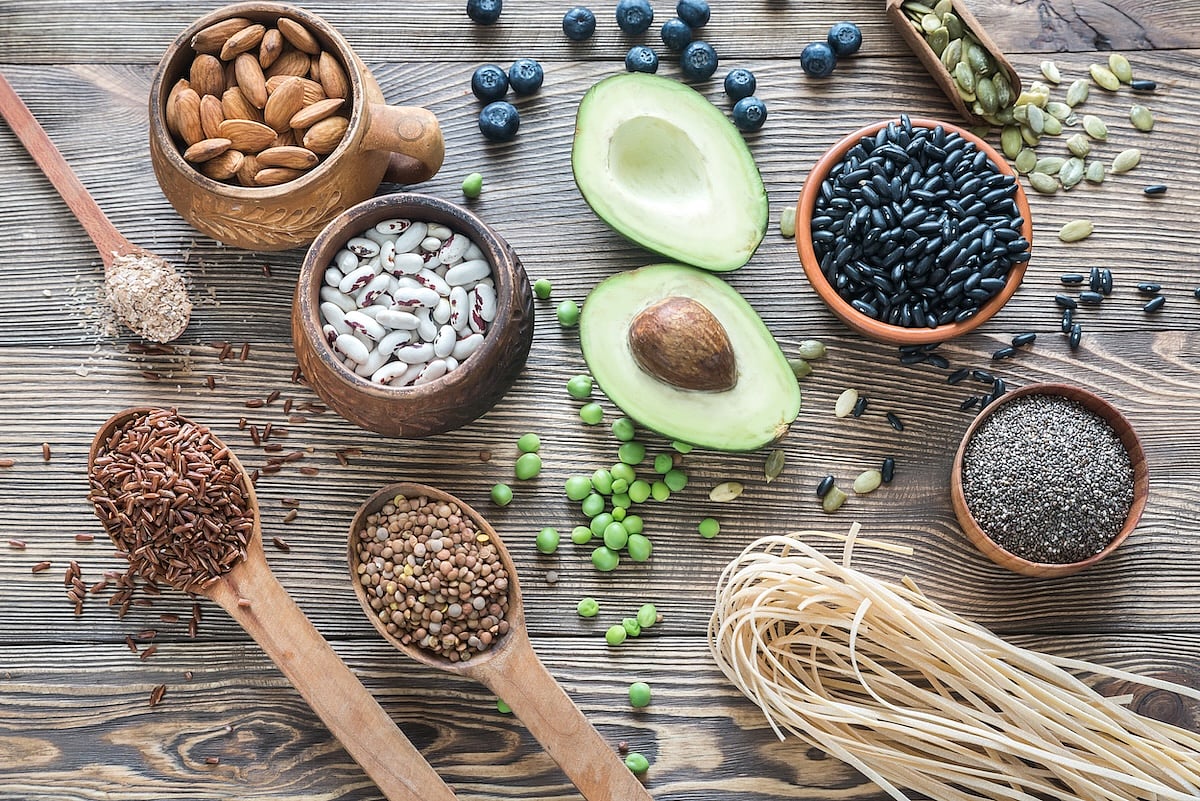
Foods high in soluble fiber include apples, bananas, avocados, broccoli, cabbage, beans, legumes and oatmeal.
"Insoluble fiber, on the other hand, cannot be dissolved and will not contribute to the calories you consume," Lee said. "The body can't take up energy from insoluble fiber, but it is critical to consume because it's the bulk of substrate that helps you have a bowel movement. Because insoluble fiber bulks up your stool, it helps to prevent constipation."
Common sources include whole grains, nuts and seeds.
Lee suggests getting roughly twice as much insoluble fiber as soluble fiber. For example, if your daily goal is 30 grams of fiber, about 20 grams should be insoluble fiber and 10 grams soluble fiber.
Many adults struggle to meet daily fiber goals through food alone.
“The majority of adults are not meeting their dietary fiber intake levels, so generally supplementation is a good strategy to meet recommended levels,” Lee said.
Fiber supplements are widely available as powders or capsules. However, Lee warns that people should increase fiber gradually.
"You could run into the extremes of eating too much, where if you're not drinking enough water to hydrate and exceed the amount of soluble and insoluble fiber, you can get constipated," Lee said.
"The other extreme is that some people respond differently to fiber and they run the risk of getting diarrhea. You really should check in with your body, since you know how your body is responding to what you're challenging it with daily," she added.
More information
The University of Michigan School of Public Health has more ways fiber benefits your health.
SOURCE: Tufts University, news release, March 8, 2026


